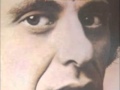
DON SIEGEL
(OCTOBER 26, 1912 - APRIL 20, 1991)
Action's Intellectual
“I don't know what people are going to think of this," Don Siegel said in a tone of hushed conspiracy as he greeted Cybill Shepherd and me for an early private screening of Dirty Harry. He thought all his liberal friends would disown him because of the picture's persuasive portrayal of how difficult it has become for police to apprehend criminals—the maniacal killer uses legal loopholes to keep himself out of jail. lt was, in fact, a complicated and subversive “A” film, Siegel's first huge success and the movie which firmly established Clint Eastwood’s enduring non-Western persona. Don had already become Eastwood's favorite director as Eastwood became the world's favorite loner from the late sixties into the nineties. Siegel had been the first to notice Eastwood's particular sensitivity and captured it well in their off-beat drama The Beguiled. Eastwood’s success as a director has its roots in Siegel's forthright approach to narrative. When Eastwood directed his first film, Play Misty for Me, as a sign of homage he cast Don as the bartender.
Schooled in the tough, no-nonsense Warner Brothers tradition of Raoul Walsh and Howard Hawks, Siegel over the years brought his own personality and imagination to bear on a number of genre films that are as precisely executed as they are unconventional in their implications. The steady escalation of his budgets in his last two active decades in no way spoiled the unpretentious, exciting quality of his work.
Dirty Harry, made in sixty days, was as violently unsettling and as unmistakably Siegel's as
Baby Face Nelson, shot in three weeks for a fraction of the cost. But, then, Don was a kind of intellectual in an action world; he was well aware of all his films' reverberations. The original
Invasion of the Body Snatchers, despite its pulp title and its tacked-on opening and close (studio cold feet), is not only the most subtly terrifying science-fiction picture ever made, but also a cautionary fable about the relentless movement of the world toward a sameness of thought and a total lack of feeling. This has only become more meaningful today, even though the movie was made while the U.S. was still reeling from the assaults of the McCarthy era.
Other raging Siegel pictures include
Riot in Cell Block 11, still probably the best prison picture to come out of the United States; Don's last with Eastwood,
Escape from Alcatraz, had much the same sense of authenticity.
Hell is For Heroes is perhaps the only war film to closely examine a soldier (Steve McQueen) whose most antisocial behavior becomes heroic under the abnormal circumstances of war. Siegel's police movies,
Madigan and
Dirty Harry, are especially intriguing in their ambiguous examination of the easy corruptibility of lawmen, at the same time as they reveal the misery and horror of their daily jobs. On the other hand, he had looked at the underside of crime with chilling incisiveness, not only in
Baby Face Nelson but in
The Lineup and
The Killers—which became Ronald Reagan's last movie, and the only one in which he ever played the heavy. Another piece of classic Siegel subversiveness. Critic Andrew Sarris pointed out that Siegel's “hero“—whether within the law or not—was always “the antisocial outcast" in a world of pervasive corruption. His vision was often bleak but depicted without cant, and distinguished by a remarkable sense of visual storytelling. Siegel claimed to be that "antisocial outcast" himself—yet he was far more sophisticated and artistic-minded than the material he generally dealt with, giving all of it the extra tension of opposites. He was also a great deal warmer than the films might reveal: John Cassavetes, one of Don's closest friends, used to
refer to Siegel as his “West Coast mother."
Our single interview—published in
Movie in London, 1968—took
place as Don was finishing
Coogan's Bluff, his last film of the sixties and first with Eastwood. lt became a sizeable success, and the seventies evolved into his most productive and lucrative period: four other Clint Eastwood pictures, including the breakthrough one,
Dirty Harry. With this success came a newly earned freedom, but Siegel was not that fortunate with any of the non-Eastwood projects he did, with the possible exception of
The Shootist, ]ohn Wayne's last movie, on which the two of them did not get along. His extremely amusing and bemused autobiography—
A Siegel Film—was published posthumously in 1993 with a loving foreword by Eastwood.
They say that TV replaced the "B" movie, but it’s not true. The reason why the “second feature“ was often able to achieve a vigor and a disturbing underground quality is because it was made, so to speak, while no one was looking. Besides Don Siegel's work, what comes to mind is the iconoclastic Samuel Fuller's and the deceptively simple Budd Boettichers; also Joseph H. Lewis' and Edgar G. Ulmer's. Never taken very seriously by critics, and even less so by studio heads, the "B" movie director often worked in a freer atmosphere than some of his high-budgeted contemporaries. TV production is so closely supervised by
networks, sponsors and producers that any sort of really personal expression is difficult. The only relation between television films and the classic "B" movies of the thirties, forties and fifties, lies in their low budgets— whence the "B" picture acquired its name in the first place. Siegel managed, often against stifling odds, to bring distinction and a disquieting ambiguity as well as a unified viewpoint to assignments which, in other
hands, could easily have been routine.
Even a casual look at the final chase sequence in
The Lineup puts to
shame so many more publicized examples of the form. And the fatal shoot-out at the end of
Madigan is among the most brilliantly shot and cut pieces of action ever made. It never fails to move me, not only because of the poignancy of its outcome in the story but, perhaps just as powerfully, because of the excellence and clarity of its direction. Hawks, the master of action, summed it up: “That stuff's hard to do,“ and certainly not something to be taken for granted in a medium that, for thirty years, has
been steadily losing its craft. Siegel was never guilty of that—even with
scripts that were irredeemably flawed, the director's sense of structure and
his gift for movie narrative never faltered.
In the late sixties, Don got me a job directing a picture Walter Wanger
was going to produce, based on a book called
The Looters. Wanger had come to Siegel first but Don was busy and, kindly, recommended me, telling Wanger to run my first film, a thriller. Wanger made my deal with CBS but died before I could really get into the script, which I eventually wrote with Polly Platt's help. CBS decided not to do the picture. A few years later, Don made a picture based on this book, released as
Charley
Varrick. He did not use my script and, though we didn't speak of it much at the time, I felt some resentment that he hadn't included anything of what we'd written. In 1985, my movie
Mask featured a clip from Siegel’s
Madigan shootout—for its explosive counterpoint to our quietly explosive scene—and a tip of the hat to Don not only for the old kindness, but for the brilliance of his craft. He came to a screening and we embraced warmly afterward; he spoke with a quiet sense of insurrection: “Do they realize what they've got? lt's a fucking tone poem!" lt was my favorite
review.
Not long before his death. l did one of my weekly CBS-TV spots on
Don's pictures and, after it aired, he called to thank me. We chatted for a while and then he said he hoped I had forgiven him for not using that script of mine all those years before. I was surprised he remembered it and, even more, that he had known my feeling so clearly. After all, he said now, he
was "a director-
auteur," wasn't he? He had to have his own way of looking at the material. Of course, he was right, I said; that was all in the past.
We said a very friendly so-long, we would talk soon. Don died before we could. I remember best his jauntiness, the neat yet casual kerchief always tied around his neck, his quick irreverence to all authority, his whispered sense of imminent revolt.
That Outcast Is Me
These exchanges were taped in Mr. Siegel's offices at Universal Studios in mid-1968, soon after he had finished Coogan's Bluff, his first picture with Clint Eastwood. The first thing I asked him was how he had got into pictures...
DON SIEGEL: There's only one way to get into pictures if you have as little talent as I have: you have to know somebody. I had an uncle who was working in an obscure position somewhere out on the Coast. I arrived to, I thought, go to China on a trader—I was supposed to arrive in San Francisco and I arrived in Los Angeles. I needed money. I was twenty and I had never worked. I called this uncle who was a very good friend of Hal Wallis. Hal Wallis interviewed me. I had no inkling of what it was all about. But I was told ultimately that I was going to get a job in the film library, which I thought was a library of books on films. To my horror, I discovered that it was stock film. My first job was cutting sunsets which became sunrises.
How did you come to head the montage department at Warner Brothers?
Largely through a dissatisfaction with the cutting department. I became an assistant editor. I found the job particularly dull and I was a very poor assistant. I damaged so much film that in self-defense the editor assumed all the responsibility of winding up films, ordering dissolves and doing all these other very important jobs that an assistant does.
So when I had an opportunity to go on to the insert department, I grabbed it; also it seemed exciting to have control of a camera unit, no matter how small. Any shot which the director was too lazy to shoot automatically became an insert, because I would go to the directors and I would say: Why shoot Bette Davis getting out of the wagon and lumbering over to the house? I'll do that for you. And of course that saved the director a bit of time.
I guess I was doing inserts about a year and then I started putting montages together, because montages in those days were largely a series of inserts. Also, montages were done then as they're done now, oddly enough—very sloppily. The director casually shoots a few shots that he presumes will be used in the montage and the cutter grabs a few stock shots and walks down with them to the man who's operating the optical printer and he tells him to make some sort of a mishmash out of it. He does, and that's what's labeled montage.
I took an entirely different viewpoint, along the lines of Slavko Vorkapich, who was at Metro. It became without a doubt the most exciting part of my film career—including today—and the most fruitful because, literally out of nothing, and with no one at the studio even being aware of what I was doing, I would write montages. I would do revolutionary things like having dialog in montages. I only got away with this because I would say to them: Well, who said there can't be dialog in montages? I was absolutely on my own. Nobody really knew what I was doing because the indication in the script would be that there was a lapse of time of ten years or there would be a man looking for work and not getting it.
During my tenure at Warner Brothers as head of the montage department, the studio became trained to look upon those situations in the script that called for montage, whether it was spelt out or not, as being my problem. I would take the script and write the montages. They wouldn't dare mess with my scripts because they were always very complicated. Where it ran one line in the script, my montage might run five pages. Of course it
was a most marvelous way to learn about films, because I made endless mistakes just experimenting with no supervision. The result was that a great many of the montages were enormously effective. I was very successful—more successful doing montages than anything I have done since—because there was no competition: nobody else did anything like it.
So I did traveling mattes, as in Confessions of a Nazi Spy [1939; Anatole Litvak], and anything I could dream up. l would just do it. l wouldn't know what I was doing but the effect would be fantastic. l think the good influence it has on my work today is that l don't strain with the camera now. ln fact, I try very hard not to do exercises in camera technique except
where they are directly helping me tell the story.
Then I began to go on the stages. I had my own camera crew and we
had our own lab on Stage 5, which was all under a very brilliant cameraman, Byron Haskin, who was then head of special effects. He liked me and gave me a free rein. If at any time he hadn't liked me, he could have stepped on me and squashed me and that would have been the last I would have been heard of. For about seven years, I shot montages, inserts and second-unit. I had more film in Warner Brothers pictures than any other director at Warner Brothers. While I had no official standing I shot continuously every day and worked terribly hard.
What was your favorite piece of work among the montages?
I literally did thousands of montages. and have a very bad memory, but just off the top of my head I’d say I did some exciting montages in
Yankee Doodle Dandy [1942; Michael Curtiz]. I thought the montages were absolutely extraordinary in
The Adventures of Mark Twain [1944; Irving Rapper]—not a particularly good picture, by the way.
Confessions of a Nazi Spy had some very unusual montages.
Did you have any contact with the directors in whose films they were?
I always made an effort to. Most of them were very puzzled by what was going on, but loved it because it meant they were able to shoot their miserable schedules easier. In order to write the montages, I read every script that came out in all versions—in itself very time-consuming because Warner Brothers might not have made many good pictures but they made a
lot of pictures. I made a severe effort to do montages in such a way that they did not attract attention to themselves but were in the spirit of the picture. In that way the directors accepted me.
When you did a montage for William Dieterle, was it different from a montage for Raoul Walsh?
Yes, when I made a montage for Dieterle it was dull, and when I did one for Walsh it had a great deal of vigor, a great deal of strength. The more I worked for directors, the more I recognized that they were as different as any other group of people; I was very aware, working close to them, of the many mistakes they all made. I think because I was forced to shoot in their various styles, I very deliberately did not copy their styles for my own.
You must realize that when I was directing montages and a great deal of second-unit at Warner Brothers, it wasn't on the director’s insistence or his instruction or sitting at his feet and learning anything from him that I would shoot my film. It was all on my own initiative. I guess what I really mean when I say I'm not influenced by anyone else's work is that I'm not
consciously influenced. Obviously we’re influenced by everything that happens or we'd be pods in
Invasion of the Body Snatchers. By the time I started directing features, I had already directed a great deal of film. I was very fortunate because when I walked on the stage I felt no different directing a feature than I did directing montage.
How did the two shorts you directed, which won Oscars, come about?
I was at Warner Brothers and I hadn't worked in fourteen months because I refused to sign a contract to direct, which started at three hundred dollars a week. I think I was earning $275 at the time and after seven years with the big balloon payment I wound up with five hundred. I had two and a half years to go on my contract and I thought I would work it out, but I wouldn't sign a new one. So I had a very serious disagreement with
Jack Warner—so serious he laid me off immediately for three months and brought me back for one day, took out my option and laid me off for three months with no pay, and that was only the start.
When I did come back and he had to pay me, he made me sit on stages of any and all pictures as a tenth assistant director. I had never been an assistant director, and I didn't function as one, especially when by mistake I was allowed the privilege of signing off extras. I gave everybody time and a half and double time. That was the last time anyone asked me to do anything as an assistant. Finally Jack Warner called me into his office and said the immortal line that “all the past was water under the bridge" and he wanted me to do a short. I started to leave his office, whereupon he ordered me back and said I could do any short. I thought. Aha, I've got him. Any short? I'll do a very expensive short; I'll do a very bad short. I wound up coming up with an idea to do a modern parable of the birth of Christ
with which I was quite sure Mr. Jack Warner, having the same background as I have—beIonging to. I hope, a different Mosaic tribe—would be displeased. Unfortunately, the short, Star in the Night, won an Academy Award in 1945.
And the same year, he insisted that I do another short. I thought, I failed on the first one, so now I will pick a short going in another direction. I did a documentary to prove that the spirit of Hitler is still living, called Hitler Lives? There wasn't a great deal of direction on my part in that one. I made quite a few shots, but most of it was blended-in stock. It, too, the same year, won the Academy Award. I've been very successful since because I haven't won an Academy Award!
You told me that when you were assisting on To Have and Have Not [1944], you learned something from Howard Hawks.
I never met Hawks, which was kind of interesting since I was one of his assistants. I was hiding in corners, but I noticed something terribly interesting. In the first place, Hawks' deportment is to me marvelous. He looks like a director, he acts like a director, he talks like a director and he's a damn good director. But the important thing for me was that he was working with an actor who could be very difficult, Humphrey Bogart, a man whom I had worked with on many, many shows doing second-unit and montages. I got along with him very well, so I'm not picking on him, but I knew many directors who found him impossibly difficult—Michael Curtiz For one. Here I saw Humphrey Bogart with a great deal of enthusiasm for his work, and that fascinated me because generally he showed an almost professional disdain for his work. But Hawks made Bogart part of his creative thinking on the set, and Bogart had very good ideas, so there was a wonderful harmony between those two men. They obviously respected each other and they worked very well together.
Of course, you have to use a great deal of discretion with actors. There aren‘t too many Bogarts in the world. There are so many actors who achieve an immediate success in television and have a great deal of power. The trick is to make them feel they're part of the show so that they don't misuse their power.
Do you see any stylistic significance to a zoom shot? Unlike many other directors you don't seem to use a zoom just for speed.
I think that I have a great familiarity with zooms because l did so many when I was doing montages. I only use a zoom shot when I feel the absolute need for it, when I can't achieve my shot any other way. And, generally speaking, you can't tell when I'm zooming. I have ways of doing it so that you're not aware when I’m doing a zoom shot. It becomes part of a normal shot. I don't come to a stop, then zoom.
Often you combine a zoom with a pan.
Yes. And I take away the movement so there's no way you can tell that I'm zooming. It offends me when you know how it's done.
How did The Verdict [I946] come about?
Through unending persistence—tenacity, a great deal of brass, a great deal of trouble—finally the millennium came, and l got my first feature as a director,
The Verdict.
With my luck it was made during the strike. I was the only director working. I used to have to fight my way to get into the studio. I never knew what set I was using. I never knew who my cameraman was going to be, what actors were going to show up. It was largely improvisation, but somehow I staggered through it and I thought for a first elifort it was all right.
The strangest thing about pictures I do: I bend over backward not to do montages. I can't remember whether there are any in it but I can assure you if there are, they were very poorly done!
In The Verdict you have a pair of central characters—the wise man teaches the less wise, a recurring pattern in some of your films, for instance in The Killers [1964] and The Lineup [1958].
Don't you think it's a recurring pattern in life? I don't think there's anything particularly unusual about that. I can't say that, like Mr. Howard Hawks, I have a fixation on what certain characters do. I really don't have any theme. On The Verdict, I was working with Sydney Greenstreet, who knew every period, every comma, every dotted "i" in the script and the only thing he would beg was that his lines should not be changed. Peter Lorre would walk on the set and his first remark would be, not What pic- ture am I doing? or What scene am I doing? but What studio am I in? What country am I in? Apparently he’d never seen the script before. We would stumble through three rehearsals. Peter Lorre was the fastest study I have ever seen in my life, and these two people, these two incredibly different people, from opposite worlds with the opposite approach to their
work, would make poetry together.
How did you come to do the second unit on All the King's Men [1949; Robert Rossen]?
I have a very dear Friend at Columbia, Larry Butler, who is head of special effects and used to work for me at one time as the special effects director when I did the montages and second-unit. I remember he was a great help to me on Saratoga Trunk [1946; Sam Wood]. He knew of this second unit on All the King's Men and he also knew that I was not working. I think I had been out of work for about nine months, which even for me is a long time.
I heard that on Mission to Moscow [1943] you had shot more of the film than Michael Curtiz, the director.
Yes. I had an enormous amount of film on it. Certainly I had more set-ups than Michael Curtiz and I must say that I got a great deal of enjoyment from working with Walter Huston, a very dear friend of mine. Incidentally, Walter Huston and Sidney Greenstreet both went to Jack Warner and recommended to Jack that he give me a picture to direct, which was possibly one of the reasons that I got
The Verdict.
What about Night Unto Night [1949]?
As my first picture was done during a strike, I guess they thought here was a man who'd had a lot of experience, so they gave me this picture, which was also shot during a strike. Some people thought that I occasioned the strike so that I would get a picture. I had absolutely no knowledge of what I was directing, not only
before the picture but
during it. The producer. Owen Crump, who was not without talent, showed absolutely no talent at handling me on the picture because he never let me get near the writer of the script and gave me no chance to become familiar with the novel, apart from my own casual reading of it. It was the most miscast picture of the century. There was our present governor of California [Ronald Reagan], who at that time was the epitome of good health, and in the picture he was suering from a secret ailment of epilepsy. There was my wife-to-be, Viveca Lindfors, who spoke halting English and still does. She was
the all-American widow who had visitations from her dead husband. There was a very artistic, sensitive man played somewhat insensitively by Broderick Crawford, et cetera. Then, when I was directing the picture, I fell in love with Viveca. Consequently she could do no wrong and I certainly was not in any position to criticize her. I just sat back and enjoyed looking at her, and she was, I must say, particularly lovely. And I did very little directing.
How did you finally quit Warner Brothers?
Under the most unusual circumstances for me: they let me go.
Haul did it happen that you were the first director that Howard Hughes hired?
It's a great big mystery. I was called into Jack Warner's office. I didn't get along with Jack Warner. He said: "How come you know Howard Hughes?" I said I didn't. He accused me of lying and said: "Anyway, I want you to go over there, and I want you to do anything he tells you to do." I said. "What the hell does that mean?" And he said, “Well he's mixed up with some picture. I know how you are and I want you to help out." So I said. "All right." I went over and drove up in my brand-new car, dressed immaculately. Up comes this bum in an old Chevy with dirty, rumpled trousers, a worn white shirt and a leather jacket pulled over one shoulder, wearing sneakers with no socks and he says, "I‘m Howard Hughes."
He put me in a projection room to run this picture. It was a particularly poor picture called
Vendetta [1951; Mel Ferrer]. I ran it and he cameback and said, "What do you think of it?" I said, "Not very much." And he said, "I want you to fix it, shoot whatever you have to. I want you to be totally responsible. I don’t have time."
I pinched myself; I couldn't believe what I was hearing, that I was going to be the producer and director. But I realized that it was a hopeless assignment, so I got fresh and said that it couldn't really be anybody‘s fault but his if the picture was this bad because he had directors like Preston Sturges on it and Max Ophiils, and somebody else and somebody else. So I left and I got called in about a week later by Jack Warner, very angry now, because he said, "You refused to help on a picture and I asked you if you'd do it, and dammit you do it!"
I went back to rerun the picture. I was asked if I needed a secretary and said no. I was afraid to have a secretary, because when I see a very poor picture I talk back to it and I didn't want anybody recording what I was saying about the picture. At about eight o'clock at night I was in the projection room and Mr. Hughes popped his head in and asked was everything all right and where's my secretary. I said I didn't want a secretary. So he goes to the phone, pays no attention to me, calls somebody, bawls them out and says that they should send a secretary right over. I felt my full independence being challenged and I said, "I don't want a secretary." He left, saying, "I'll see you after the picture's over."
I started running the picture. Sure enough a girl shows up, a typical Hughes secretary: sexy, bouncy and with a lot of pencils. I said: "If you write one note, I'm going to kick you out of the projection room." And she says, "I know, I know—please—l'll just sit here and I won't write anything." And that was that.
Anyway, I felt the picture was absolutely hopeless, so I went back, and in an odd, kookie kind of way I felt sorry for Mr. Hughes. I wrote him an outline of what I thought of the picture and what I thought could be done with it. I ended it by saying, "I don't know if you’ve taken the time to wade through all this and it really doesn't make any difference because nothing could save your picture." The next time I heard from him was some years later, when he called on me to direct his first picture when he had taken over RKO. Apparently. he had seen
The Verdict and liked it, maybe because it was shot during the strike. He hired me to do
The Big Steal [1949].
At the time we made the picture, Robert Mitchum was in jail on a marijuana charge. This script was a desperate attempt to prove to the court that RKO was suffering because Mitchum was in jail. He was actually assigned to this picture
after he was in jail. While he was still in jail, I went down to Mexico and shot the end of each of the sequences of the chase first, Bill Bendix chasing Mitchum. Then three months later, I went back to the same locations and shot the front part of the chase with Mitchum. Naturally my attitude toward the picture had to be one of fun because l didn't take the story and the whole situation seriously. It amused me that Mitchum, in the picture, would come running into a sequence and the trees would be green with hill leaves, and Bendix would be right on his heel and the trees would be bare. We shot this picture in the heart of the marijuana district in Mexico, halfway between Vera Cruz and Mexico
City. When Mitchum showed up for work, he was absolutely out cold, having drunk a bottle and a half of tequila with his probation officer, who if anything was drunker than Mitchum.
When Mitchum wasn't drunk, which was infrequent, I got along very well with him. He has his own inimitable style. It's impossible to give him a reading and one shouldn't, because his delivery is entirely different. I have a great deal of respect for him—I think it's his privilege and he's very successful doing it. He leads a very strange life. Maybe next week I'll be working with him. I don't look forward to it.
I haven't seen No Time for Flowers [1912], but. . .
You've missed nothing. I wish that it were a better picture because you would have to be enormously talented and have everything working for you to do a
Ninotchka [I939; Ernst Lubitsch] . This was at best a poor man's
Ninotchka and it certainly wasn't Lubitsch directing. Even though my wife was excellent in it, she's not Garbo and certainly Paul Christian isn't Melvyn Douglas, and we had a producer who was more interested in making money as we were shooting the picture than in making money because the picture was a success. I had a sequence where the Czechoslovakian post
office was being robbed by the Russians. We had requisitioned fur coats, cameras and things, but l had nothing to work with. Apparently the money had been spent, but not on the props for the picture.
The film was laid in Prague and I said to the producer, "Why are we shooting this in Vienna? Every time I go out to shoot anything you say, ‘Don't shoot that because that's obviously Vienna.' Why didn't I shoot this on a back lot somewhere in the States?" lt was one of the stupidest situations I‘ve ever been in. I was totally unable to defeat it because there I was in Vienna. Apparently he raised his money in Vienna. and didn't have enough intelligence to make a story
about Vienna. I was shooting inside
all the time. And you want to become a director?
Did you have problems on Duel at Silver Creek [1952]?
I remember going in to see [Leonard] Goldstein, the producer, to ask permission to finish the script so that at least I would know who gets the girl. I didn't think that was too awful a request for a director to make. He said, "Kid. how many pictures have I made this year?" It was then November. I said. "Gosh, I don't know, I believe you've made an awful lot." He said, "I've made nineteen and I didn't make them by pushing them back two weeks." So I went into the picture not knowing whether Steve McNally or Audie Murphy got the girl. I couIdn’t take the picture seriously.
I committed the cardinal sin of all cardinal sins at Universal in those days: I wound up with fifty-four minutes of film, so I had to write a prolog and an epilog, which were in the version you've seen. I was so humiliated by the fact that I'd only shot fifty-four minutes of this ludicrous script that I really tried to do a good job on the prolog and the epilog. Anyway, I think we pushed it up to a staggering seventy-seven minutes.
The biggest thing I did on the picture was to give Audie Murphy confidence. He had no confidence at all in himself, and I think I was successful in doing that. I worked very freely on the script, as I like to when I'm shooting. I realized that this wasn't going to be anything earthshaking; on the other hand, once I’m on a picture I have to believe in it and I really did try my very best to do as good a job as I could on that sort of thing.
What can you tell me about Count the Hours [I953]?
It's an absolutely nothing picture. It was shot in nine days and I think it looked it. I like Jack Elam in the film, but. . .
Was that the shortest schedule you've had on a feature to date?
Yes. I was sitting on the stage one day at Motion Picture Center. I'd made a change from one stage to another and this was the first time I’d ever seen this stage—that‘s how carefully planned all these shots were! I was sitting there trying to figure out how the hell I was going to make this work. What I didn't realize was that [producer] Ben Bogeaus was stealing this set. No one knew we were shooting it and the present head of Universal, Jennings Lang, walked on the stage and said, "Hi, Don." and I said. "Hi." He said, “What are you doing?" “I haven't the slightest idea what I'm doing. I’m trying to figure something out." "No kidding, Don, what are you doing?" "Well, I'm doing this picture for Ben Bogeaus." "But you're not going to use this set?" "I don't know how well I'm going to use this set, but that’s the intention." "You can’t do that! That's the set I had built for
Joan Crawford for a television show. You can't use it." And, sure enough, he was right—I was kicked off the stage. I went to somebody's house to shoot the scene.
After this day which, by the way, was our last, I noticed that the crew, which was absolutely marvelous, was dogging me and I finally found out why: they hadn't been paid, and, of course, I hadn't been paid. We'd shot so fast, nobody had caught up to it. We had a meeting and I said to the crew, "Let’s finish the picture and we won't turn the film in." So that's what we did. We turned the film over to Adler. who is still in the Cameraman's Union there—their business representative—and ultimately everybody did get paid off.
The lighting is awfully good.
That's interesting, because that was John Alton, who
paints with light. All other cameramen hate him. He gets his money by saying, "How much money do you have for overhead rigging?" and I say, "Well, we're going to spend about two thousand dollars," and he says, "I'll take the two thousand for that because l won't have any rigging." He didn't use any overhead lights. A very interesting cameraman and very, very fast. There's nothing you can do to upset him.
Why isn't he used more often?
l hope John will forgive me for saying this: I think he tends to go off with his shooting to prove his point. I mean, you'll say, "I can't shoot through this window." This happened to me on that picture in a room we were shooting in—I was staying away from the window and he kept asking why. I said I knew he'd never be able to cope with the balance, shooting tight into bright light. He said, "Don't worry about it." So I shot into the bright light and, of course, it was all hard and white and looked terrible. He does that—though he's a wonderful man. lf he wouldn't do that he'd enjoy much greater success. He has a good reputation—not with the cameramen: they don't like him because he breaks their rules. For example, you'd have a torchlight, and the average cameraman would say, "It'll flare." That's exactly what we would do, so it
would flare, like we do today.
Did you enjoy working on China Venture [I953]?
I had a marvelous relationship with Edmond O'Brien, but I started out disastrously. In order to gain some time I always invite the cast over to my house to have a rehearsal—secretly, of course: the studio doesn't know anything about it—to avoid worries about the actors asking to be put on salary, which they never do. Eddie didn't show up. This annoyed me for two reasons. One, it meant that I had to read his part, and I wasn't equal
to it and, two, I thought it was a very phony attitude for a guy that I respected as an actor. It was only well into the picture that I found out why
he didn't show up. I changed some of the writing on the set and wrote a
new interpretation of a scene, new dialog. I gave it to Eddie and he
couldn't read it—he was blind with cataracts in both eyes. He's since had
them removed but he had a stand-in who read to him. He broke down and told me that the reason he didn't show up for the reading was that
he couldn't read. He was afraid it would be reported back to the studio and he'd be out of a job. That taught me a little lesson not to jump to conclusions.
I went at it full tilt—I enjoyed shooting it and almost swamped one of the stages, I used so much water. But again it's the old thing that seems to plague me and it's got to be my fault in the final analysis—the story was weak. I didn't know how to end it; I just didn't know how to.
You were most interested in the O'Brien-Sullivan relationship?
Of course. It was all I had to go on. I tried to make it as true as I could under the circumstances. That was the whole story. There was nothing else to it. That picture was made very cheaply.
The jungle atmosphere was good.
All faked. and I thought it was good—I have an eye for that. I can do that kind of thing without a great deal of sweat and pain. I don't think it's a secret. You may just have an eye for composition and an eye for how to get yourself wrapped around a tree without making it look as if it's a back lot tree, a way of staging a scene so that apparently you have great scope. For instance,
Stranger on the Run [1967] was shot entirely on local locations, and you'd absolutely swear you were in the middle of Texas. I'm not consciously doing anything remarkable. I'm just aware of the limitations of shooting on the back lot and I try to conceal them. For instance. if there's an area which looks weak, I decide that I'll pan down to the feet of the guys walking and then come up where the area's good. I would think that came from montage work where I had very little to work with. Now, others wouldn't do that. At the moment where it's weak, I'm closest to the feet. This is no hard and fast rule, just an example.
Do you consider Riot in Cell Block 11 [1954] to be your first important film?
Yes, I do. I had a wonderful producer. I'm very happy to talk about Walter Wanger because I'm well aware that I have a very strong antipathy toward most producers, but here l was working with—that’s a nice word, "with"—a man who gave me an enormous amount of education about penology, so much that I was able to go out and lecture on it, so much that I became involved with the vicissitudes of life in prison.
Walter inspires one and he encourages creativity. That's what most producers lack. They don't encourage it. He
wants you to create. Walter is a producer who produces; he doesn’t direct. He wouldn't direct
traffic. He's not interested in directing, so he would never say anything to me about the way I was shooting. I'm not saying that he wouldn't have criticized the direction, but he's not trying to impress anybody. I felt that this picture had something to say and didn't choose sides.
When we ran the final version without music for the brass at Allied Artists, to a man they got up in the projection room and walked out without any comment. They loathed it. I turned to Walter, who was sitting beside me, and to the writer, Dick Collins, who was on my right, and I said, "We're dead!" And Walter said, "The hell we are—they just don't know anything." The picture went out exactly as it was. Then, of course, they became very enthused and it became Allied Artists’ picture because it was a big success.
The word “producer” needs an enormous amount of definition, because most producers work for a salary like you or I do. You're given a script. Now the man who's giving you the script, if he is a good producer, has a good property and has worked well with the writer. Hopefully, he's not himself a frustrated writer. He should encourage the director to give the film the director's signature, so that it will be put on the screen with the director's talent. This needs the producer's encouragement. Many producers are so jealous of their prerogatives that there's an instant antagonism between producer and director. For that reason alone, I like to produce and direct my own films. It eliminates one roadblock. There are many other roadblocks but that at least is one that can go.
How did Riot in Cell Block 11 come about?
It came about because of Mr. Wanger's incarceration.* He got this idea to expose the many evils in our penal system. I honestly don't know how this script came to me. I believe that all the directors Walter wanted turned it down because they felt that it lacked story content. I didn't turn it down for two reasons: one, I was hungry and two, I really liked it. I saw a great
chance in it and had a lot of ideas, which he encouraged.
I liked the idea of a riot taking place in prison. The evils of the prison are shown through the rioters, and the guards, instead of being sadistic, are shown as being tired, overworked, underpaid. The warden, instead of being crooked, is shown as a man who's really got a tremendous problem. This to me is exciting.
*Wangcr had been jailed for shooting at, and wounding, agent/producer Jennings Lang in a jealous rage over Wanger's wife, loan Bennett.
This was all in the original script?
Yes, all inherent in the script. Dick Collins did a very good job on his version, but I went out and wrote it on the actual location at Folsom Prison and that gave it the sense of immediacy. I molded the script so it would have the excitement it does have. There's a lot of me in the script and a great deal of Dick Collins. We got along very well—there wasn't any question of who was writing what, because he wrote it all—but I think he would admit that l contributed.
Our oft the themes of your pictures seems to be the difficulty of controlling violence once it has been triggered.
I think we're all, in varying degrees, holding back violence. I'm a very violent person, although I have a very calm exterior.
Many of your films are very violent.
Yes, but l like the violence to be essential to the telling of the story. I don't like violence For violence's sake: I'm extremely uncomfortable with that. So many pictures today go out of their way to linger on it. It's in very bad taste and it's very poor drama. After a while you're just bored with it; it has no meaning.
Riot in Cell Block 11 seems to have a documentary approach. Is this yours?
Yes. Of course, I was extremely fortunate: I spent sixteen days shooting at Folsom Prison. Consequently, it was as documentary as I could make it. The whole picture was shot there, with the exception of a few cell interiors which presented difficult problems for us to light.
Whose decision was it to use only unknown actors?
Probably the studio's—give them credit for something—only because they felt that it was an unimportant picture and that they would save a lot of money. This was fine with me because it made it more documentary, and many very fine actors are unknown.
Neville Brand has a lot in common with other "violent loners" in your films—like Steve Cochran in Private Hell 36 [1954], Mirkey Rooney in Baby Face Nelson [1957]. Eli Wallach in The Lineup. Steve McQueen in Hell Is for Heroes [1962], Lee Marvin in The Killers—are you consciously attracted to this kind antisocial character?
I think I am that character. Certainly I am at the studios! I am attracted to that character, though I don’t think you can generalize, because the character that Mickey Rooney played in Baby Face Nelson was without relief a villain. I don't think I created much sympathy for him. I saw in all the reading I did on the real Baby Face Nelson that he was a sadistic, inhuman psychotic, and I think I showed that.
Richard Widmark in Madigan [1968] is another typical Siegel hero.
I think anybody who's independent, regardless of their stature in life, is like that—who won't take it lying down, who talk back, fight back, who are not one of the large group of people who just go with the tide. You're much happier when you're not that kind of a person—that's for certain.
What do you think of Private Hell 36?
There were good things in Private Hell 36, although I was uncomfortable when making it. It wasn't one of my favorite movies. I had a good cast: Ida Lupino, of course, is a remarkable woman and a very good director, too. Howard Duff was excellent, Steve Cochran was very good, and Dean Jagger—you can't get anyone better. But I was uncomfortable on the picture because I was unprepared—I was forced to start shooting when I wasn't ready, and frankly, I didn't feel that I was getting along well with Ida. I think she felt that I didn't like her, which wasn't true because—l've never told her this—actually l‘m very fond of her and I admire her a great deal. Maybe I felt that she would have done a better job of directing the picture than I did.
How did you work with Burnett Guffey?
Guffey is an excellent photographer. I respect the cameraman and I can only tell him what I want out of a scene and give him courage that in case there's nothing on the film, I'm going to back him up. Occasionally I'll notice that the scene is being overlit and, sotto voce, so that no one can see or hear, I'll point out that I think he should take another look at it, that there's too much light. I never encroach on his domain or undermine him with his crew. I don't rely on cameramen to give me the setups, but I do think the lighting is their problem. A lot depends on which cameraman is working with me. Some cameramen I can't communicate with at all.
How much do you preplan sequences on paper?
I have the advantage of being able to envisage cinematically what I intend to do. Now if I don't know what the set looks like, forget it—there’s no point in any planning. If I don't know what the location looks like, there's no point. But if I do know, I can sit in front of the typewriter with the script in front of me and have total recall of the set and where the doors are. I might have, not a sketch because that would be much too expensive, but a plan layout, or, if at all possible, I would have seen the set the day before, so that I would know where all the furniture was, the placing of it, and then I would lay it out as I think it would be cut. It's stupid for a director to lay it out the way it's going to be cut if he‘s not an editor, and doesn't understand editing—he's just wasting his time. Let us presume for the moment that I've laid it out satisfactorily as an editor. Now, because of lack of time in shooting, I lay it out in terms of my shooting continuity, which does not mean that it will interfere with the type of shot that I’m going to make, but that I'll complete shooting in one direction before I turn around and shoot the other way, which saves an enormous amount of time in moves and in lighting.
Obviously it's to your own advantage to shoot as much film as you can. I don't have that privilege, so I have to make my film count. In other words, I can't do as George Stevens did on A Place in the Sun [1951] with Shelley Winters in that room: I can't use one shot, when I've made 150 other shots for the sequence. I would just make that one shot and walk away from it. Probably, I'd be wrong—it wouldn't work—but I'd be stuck with it, because I wouldn’t be able to afford the time. Now, I don't know the true history of that shot of his—maybe I'm doing him a grave injustice but . . .
His reputation is that he shoots a lot of. . .
Yes, he shoots in a circle. But if he can do it and get away with it, God bless him. I think if I could get away with it—if I had the time—I would do the same thing: I'd make a lot of luxury shots, kookie shots, very interesting stuff I don't dare indulge in.
On Coogan's Bluff [I968], there's a psychedelic sequence, which I honestly feel most directors would have taken a week to shoot. I had one day. It was a very expensive day, because we had four hundred extras and tremendous effects. I threw away more shots than I made, recognizing that I'd never make it. I had a million ideas for shots and I wish I could have shot them. I think it could have been much better if I'd had more time.
I wanted to shoot Treasure of the Sierra Madre [I948]. It was the only picture I've ever asked to do. John Huston did it, and he did a marvelous job. I knew a great deal more about films certainly than John did at the time he did Sierra Madre, but if I had directed the picture it wouldn't have been as good as John's, for this reason: they would have said, "Now, come on, Don, you don't have to go over to Mcxico—you can figure out a place to shoot it—you know, a local location, tie it in with the back lot and use matte shots," and all this junk, and I would have fallen for it. With John that was impossible: he didn't know anything of all that nonsense. He knew there was only one way to shoot it, and he was right: shoot it in Mexico. He shot it properly—on actual locations—and he did a terrific job.
In Private Hell 36, the domestic side of the film, with Dorothy Malone. seems to work out less satisfactorily than the rest.
It did, and that was the fault of the script and of the director. I didn‘t feel that I could stop long enough on it, so I didn't.
How did An Annapolis Story [I955] come about?
Every piece of color film ever made, of all sizes and shapes, was thrown together, anything we could find: 16 mm or Technicolor photographs, anything you could think of. It was probably the worst mishmash of colors ever done. We used the old Technicolor camera, you know, in the great big box. Again it was a cheating kind of picture—we didn’t go to Annapolis to shoot it. It was a back-lot picture. I knew no other way to do the picture than to have some fun with it, and keep it alive and alert. It certainly is not a good picture.
Did you work on the screenplay for Invasion of the Body Snatchers [1956]?
I worked very closely with Danny Mainwaring. who's a very fine writer. Again we were helped and inspired by Walter Wanger. With all the titles in the world it’s impossible to come up with a worse one than Invasion of the Body Snatchers. It's so bad that it has totally obscured the original title—I can’t remember for the life of me what it was.
How did you work on the script?
Jack Finney's story is a damn good one. We just translated it into cinematic terms. There was a real effort to make it completely believable—that was the big chore—so that it wouldn't be just another special-effects
picture.
The terror of the film is in its absolute reality.
Yes, I agree. This is probably my best film—because I hide behind a facade of bad scripts, telling stories of no import—and I felt that this was a very important story. I think that the world is populated by pods and I wanted to show them. I think so many people have no feeling about cultural things, no feeling of pain, of sorrow. I wanted to get it over, and I didn't know a better way to get it over than in this particular film. l thought I shot it—terribIe talking about myself this way but I have for some time, so I may as well continue—I thought I shot it very imaginatively, as in the cave which I found, when they run over the boards. All this was me. And I was encouraged all the time by Wanger.
What hurts it slightly is the opening and the ending—mainly the ending. Obviously this wasn't your decision.
Nor was it Wanger's decision. The studio felt, as pods will feel, I suppose, that you can't have comedy in a horror film, and so they wanted clarification. They insisted on a prolog and an epilog, which I shot in self-defense. If I didn't, they were going to have one of their pod directors do it, and they had quite a few. The ending of the picture, as it was, was one of the most dramatic I've ever done and, for that matter, ever seen. lt ended with Kevin McCarthy pointing his finger at the audience and screaming, "You're next!"—and the curtain came down and you were in a state of shock because you didn’t know whether the person sitting next to
you might be a pod. The prolog was totally unnecessary, I started in a simple little town with him getting off the train, just a very ordinary little story about suburban life. And then this gradually took place.
If the opening and the ending could be clipped out, would the picture look pretty much the way you shot it?
No. It wouldn’t look like we shot it, because the damage had already been done within the film. I wanted it to be so normal that when any reference about pods is made to anybody it seems absolutely ludicrous. There was a great deal of laughter in the film—they took all that out. The picture is good even though they did all this, but it would have been even better. You could take off the beginning and the end, that's right, and it would be a lot closer to the way that Danny Mainwaring and Walter Wanger and l conceived the picture.
Is there a specific political reference in the picture to McCarthy and totalitarianism?
It was inescapable, but l tried not to emphasize it because l feel that motion pictures are primarily to entertain and l did not want to preach.
How did you shoot that last freeway shot? Was it night and was it really done on the freeway?
Yes, it was done on a bridge over the freeway that is not used very much. I think we had fifty cars with an 18 mm lens. It got pretty frenetic. I shot it during one evening.
In Body Snatchers, were you laying into American society specifically, or the world?
The world—I think the world is sick; the pods are taking over. There are wars that are totally inexplicable to me. I’m very much against wars—I don't think they accomplish anything. I don't see that the world is getting any better. I can’t think it's getting any better. Pick up Time magazine and they're fighting here and they're fighting there; they're fighting everywhere. It doesn't seem like it's ever going to stop.
The pod element is a lack of feeling . . .
That's right. Absolutely. Most people—certainly here at Universal, in Hollywood, California, U.S.A—go unthinking about their work. They're not aware what's going on about them; they're very selfish. And I'm one of them. I get so wrapped up in the work I'm doing, I'm not even aware that many less fortunate people are out of work, or starving, or in need of help. I'm blinded by being busy and I don't like to think about it. So, I'm becoming one of those people that l hate. I'm becoming a pod.
Did you have a lot of input in the script for Crime in the Streets [1956]?
You'll be surprised to hear me say this, but Reggie Rose is quite a writer. It played on television, but l made many changes in the script, which Reggie Rose didn't like, so my relationship with him was not the best, but l felt that the changes were absolutely necessary cinematically.
I guess I was slightly in awe of Reggie Rose, though I had no contact with him during the making of the script, but the producer was absolutely in love with him. A great many New York actors came up, damned good ones, I might add, and they had been in the original production, so I probably used more of Reggie Rose than I should have. John Cassavetes was in it. It was his second movie—his first movie out here; and a marvelous guy who is now also a director, Mark Rydell, was in it.
The whole picture was shot indoors. I thought it was a remarkable job and a good film. What was really wrong with the film was that it had a chilling identification for the average citizen—who loathed the film—I think, because there was no excuse for what these kids did. You know, people identified themselves with the man who was beaten up. And it came out at exactly the wrong time. There was a surfeit of those pictures—Rebel
Without a Cause [1955; Nicholas Ray], Blackboard Jungle [1955; Richard Brooks]—then we came out.
You were the last. . .
That's it. Dead-last-as-usual Siegel!
Did you have any feelings of nostalgia for Warner Brothers while you made Baby Face Nelson?
No. I don't have feelings of nostalgia for Warner Brothers because I very actively disliked the senior member of the company, Jack Warner, and I felt that he . . . I'll rephrase it: I still bear the scars.
The reason that Baby Face Nelson turned out as well as it did was that we threw out every word of the original script. Danny Mainwaring did a fantastic job in two weeks. Mickey Rooney, who's one of the most difficult people I've ever worked with, was absolutely superb in the role and for most of the picture had a certain respect for me because I played better table tennis than he did. I thought it had a great deal of vigor. It was marvelously photographed by Hal Mohr. It was made under enormous handicaps—under an aura of unpleasantness throughout, which maybe was reflected in the viciousness, because I took out my anger against everybody in the picture. It was very cheap, by the way. It cost $175.000 to make and it took a lot of bookkeeping to make it up to 175.000.
The last day of shooting on Baby Face Nelson, which I believe was the seventeenth day, the producer came to me and said I had to finish, because he had run out of money. I said it was absolutely impossible to finish the picture. He said. "If you don’t finish it, I'll just take over." I believe Mickey Rooney was warming up in the wings. I went to Mickey, to explain the problem to him. "Look, you've got to stick with me, because we're gonna ruin the picture." Mickey Rooney, I thought, was more interested in taking over the picture than he was in my successfully completing it, so I had to figure it out very carefully and make every shot count, and I cut very severely in the camera.
I made fifty-five setups—not easy ones, by the way, but a distinct fifty-five. Each shot was literally cut into the picture. This included all the stuff on the outside of the hideout, all the chase, particularly where he gets shot at and they all fall out, and then where he staggers over to the grave, puts a chocolate in his mouth and dies. I had no idea, working under these circumstances, that the picture was going to turn out as well as it did—a large part of the success was Mickey's performance. On the other hand. I don't want to go through another experience like it. It was horrendous.
Did you influence the casting?
Very much so. For instance, there was the part of the sleazy doctor, so I went to an old friend who I knew was going to throw me out of his house, but I wanted him to play this part. Sir Cedric Hardwicke said there were two things he always wanted to do: one was to play a clown and the other was to play a gangster, and he’d be delighted, so he played it. In the meantime, by getting Sir Cedric Hardwicke I had lost the part for another very close friend of mine, Jack Elam. There was a part called Fatso, so I suggested Jack Elam for the part to the producer, who said, "How can Jack Elam, who's very skinny, play the part of Fatso?" And I said. "Don't you get it? That's exactly why he plays it, because he's so skinny." So he got the
part.
Why did you see Hardwicke in it?
Hardwicke, particularly in those days, was a terrible villain. He drank a great deal and was a great deal of fun and he looked like a sleazy doctor. The picture everybody has is of someone very prim and proper, but he was not at all that way. So, again, you can't type people any more than I should be typed for the rest of my life to do pictures of great violence when I abhor violence and I never use violence for violence's sake. And yet I'm
known as an action (whatever the hell that means) director.
Your attitude toward the criminal characters isn't one of condemnation.
I don't think it's any different from the attitude of any educated person toward them.
Did you think of them as symbolic of society?
Yes. I think that what's going on today: out of poverty must come crime, out of a sense of inadequacy, out of a sense of inevitability of going to lose your life in Vietnam, is going to come crime.
We tend to identify with Carolyn Jones. Is that your intention?
Yes, I think so. I don't have any sympathy for Nelson. I might have had sympathy in the sense that he is the product of the times, but as a person, I certainly didn't like him, or understand him. He killed senselessly and he enjoyed it. He was an arrogant, brutal man, and a lot of this came out because of his size, and his feeling of inadequacy. A lot of the misunderstandings about Mickey Rooney are because of his size, because a feeling
of having to prove himself comes up.
He was pre-cast, wasn't he?
Yes. He was part of the show. He owned 45 percent of it, which he very stupidly sold, because the picture made a tremendous amount of money.
One critic has pointed out— this is in opposition to what we were talking about before—that you do not indict society in your studies of people like Nelson, but that you investigate them as individual outcasts.
Well, I don't make any apoIogies—after all, I am telling the story of Baby Face Nelson, and so I set about telling it. If in telling it, I show him to be the kind of person that he really is, then I think I'm successful. I don't
state anything except as in Hell Is for
Heroes when I show the futility of war by having our hero, Steve McQueen, blow himself up; but I don't take
sides.
Do you think it's possibly your best work after Invasion?
No, I don't. Madigan is a much better film, an entirely different kind of film, but a much better one, I think.
What are your favorites?
I never know until after the picture's come out. If the picture is a big success, obviously it's going to be one of my favorites. If a picture isn't well received, then it won't be one of my favorites. And when I say "well received“ I mean both critically and at the box office. For example, a picture that I thought was, from my standpoint, a fine
motion picture about something, with a great many laughs, a lot of hard, very interesting characters, showing the utter futility of war, was Hell Is for Heroes. Now that picture was not a success—I cannot understand why it wasn't. The only explanation I have is that the studio didn't get behind it.
I liked The Killers. l thought we had a very interesting attack on it; l liked my style on it very much. l thought it had my stamp on it, even though it was originally made for television. I made it literally as a motion picture, which was the only way to make it. And the studio wasn't too unhappy, because they wound up making a lot of money out of it as a feature. I'm not sure about my present picture, Coogan's Bluff, because I'm in the middle of cutting it. It could well turn out to be a successful picture—I hope it does.
Do you like Spanish Affair [1958]?
Ugh! I don't know the Spanish word for "ugh." It started out with one of the wealthiest men in the world, Bruce Odlum. His father is Floyd B. Odlum, who's got I don’t know how many billions, and this was his baby. They paid me a lot of money to direct it.
There was a very long dolly shot down a street with Richard Kiley and Carmen Sevilla which must have been six or seven pages of dialog.
It presented a great problem because the girl didn’t speak English. We had to teach her English for this scene and I tried, kind of stubbornly I guess, to get it in one shot. [Cinematographer] Sam Leavitt was very upset because I let the girl stop wherever she had to stop. He had it all worked out that she was supposed to stop each time in the light. I didn’t care whether she had marks because I was very worried about whether she could get the lines out. Consequently she stopped in all the wrong places where she wasn't lit. And l thought the shot looked marvelous.
What makes you decide to do a scene like that in one shot?
I never could quite explain these things to people. I just thought you'd feel that I was in the city and that I wasn't tricking it up. These two people were ultimately going to be one, so I tried to make it in one shot.
The theme of the film seems to be the struggle between the old architecture and the new architecture.
That is the whole story. Don't you think it's a very dull premise for a picture—the struggle between the old architecture and the new? At least in our clumsy hands it was! We tried, but l thought it was a big failure.
Whose side were you on?
I was definitely on the side of Spain. The Prado, as you know, is one of the most wonderful museums in the world, with priceless paintings. I wanted to use the paintings as main titles, and we couldn't get into the Prado to shoot—absolutely impossible. One day I'm walking past the Prado—I lived across the street from it at the Palace Hotel—and I'm with
a very young, brash Spanish assistant director. As we were passing I said, "What a shame that in this picture we can't get in there to shoot!" And he said, "Why can't you get in to shoot?" I said, "Oh, it's impossible!" "Well, I don't see why it’s impossible. Let's go in." So we went in and he saw
somebody there and I gave him five hundred pesetas. The next thing you know we're in there shooting! Of course, I was scared to death because if we had damaged any of the paintings we'd have never got out alive. But we didn't. We were very careful and Sam did a marvelous job of photographing them and that was that.
In making The Gun Runners [1958], did you avoid looking at the Howard
Hawks or Michael Curtiz pictures based on the same novel [Hemingway's To Have and Have Not]?
No. I was very sorry that I looked at them, because I realized how utterly ludicrous it was for me to remake To Have and Have Not [1944; Hawks] and The Breaking Point [1950; Curtiz], both of which had superior casts, superior stories, superior money and superior time. I thought it
was absolutely stupid to remake To Have and Have Not and particularly to do it as a sea picture, with a "C" budget. It was one of the most diicult
pictures I've ever done. That sea stuff was very difficult to do, and it as one of the most unsatisfactory pictures, because I thought I had a poor cast. I might have gotten by with a better cast. I don't know why they do it—why they don't reissue To Have and Have Not and The Breaking Point.
You had very little to do with the casting?
I'm proud to say that I had very little to do with the casting of that picture.
How much of the Eli Wallach and Robert Keith relationship in The Lineup was your contribution?
A great deal of it. Stirling Silliphant at that time was not the great big powerful Stirling Silliphant that he is now, and he looked upon me as kind of an old, excellent director, so he listened to me. We got along very well, and I thought it came out well. I'm born under a star of always having dreadful titles. I pleaded with him not to call it The Lineup, but he insisted on doing it, so the result was that the picture was not a success.
You didn't want him to call it The Lineup because of the TV series?
That's correct. I thought that nobody would go to see it, because they'd think it was just an enlargement of the TV series. Actually it had nothing to do with the TV series. One of the stars, Tom Kelly, wasn't in it, and it could have been more properly called The Chase or some other title like that.
The chase sequence: did you plan each shot and how it would fit, or did you work it out later in the cutting room?
When it is large and covering such a huge territory and shot under the handicaps of having to control traffic and not to kill anyone, the planning is overall to start off with—it's roughed in. So I had a pretty good conception. I had a superb stuntman, Guy Wade, totally fearless and crazy, and a magnificent special-effects director, Larry Butler, who was a great help to me. And I had a lot of luck—nobody got hurt, thank God.
I tried to avoid making the chase Mack Sennett-ish—which is very easy to do. I tried to make it as realistic as I could. And in doing that it was hair-raising. I was very nervous. The police in San Francisco give you the most absolutely fantastic cooperation; they'll do anything you want to do, and that was largely because of Jaime Del Valle, who was the producer of the picture and also of the series. and is extremely well known in San Francisco.
I ran the chase without sound, exactly as it is in the picture, for the producer. I knew it was a marvelous chase, the best chase I'd ever done. At the conclusion of it, the lights went up and he turned to me and said. "Not very good, is it?" And I said, “You gotta be out of your mind. It's the greatest chase that I've invented because it’s beyond what I've ever directed. It's the greatest chase that's ever been shot in the history of filmdom." I was so upset that I went back and laboriously put the sound in—screaming tires and all that sort of thing—and I didn't change one cut. I went back and ran it for him. Afterward, he shook hands with me and his palm was wet and he said, "Absolutely marvelous!" He thought I'd made a lot of changes and I hadn't made any.
Were you in any way influenced by Orson Welles and his Lady from Shanghai [1948]—the quest for a secret—or the imagery in the aquarium scene?
No. It’s funny, because I tried to figure out some place to shoot, and I remember just picking the aquarium because it seemed to me an interesting place to shoot.
You hadn't seen The Lady from Shanghai?
I haven't seen it as of this moment.
What about the disturbing imagery of the doll with the drugs underneath her
skirt and Robert Keith as the dirty old man picking up the little girl at the aquarium?
Well, I was very conscious of what I was doing, and certainly that area
is as important as getting the proper setups and other factors in making a picture, and I'd spent a lot of time on it. If the doll hadn't been as interesting as it was and if it didn't make sense, then you wouldn't have been with the story at that particular point, so we spent a lot of time on that doll. I had to find something that was absolutely innocent, so it really is almost basic plot construction. If you can involve a little child . . .
What about the idea of the drugs being under the skirt, so that in a sense he has to lift the skirt and violate the doll in order to get the drugs.
I didn't get that connotation—I'm trying to be as honest as I can—l
don't feel that I labored the point so that it could be considered in bad taste. But I couldn't have put it there without being aware of what was taking place. Of course, violating the doll, and with the child being in extreme jeopardy, means in a sense violating the child. So the imagery works.
Are you disturbed that an audience relishes moments like those and others of brutality?
Well, if I’m shooting a scene, hoping to get a reaction from the audience, and the audience reacts, how can I be disturbed?
Again, one feels a certain sympathy for Eli Wallach—did you?
Certainly. And I admired him because he was so resolute in what he was doing. He gave an excellent performance. You know, Eli Wallach is a great actor, but like all great actors—he has so much to give—he must be watched carefully by the director, or he'll overact. This isn't because he's a bad actor, but because he can call on such reservoirs of talent. In this picture he played it chillingly, very real, very believable.
Did you enjoy the chance to work with him?
Very much. I don't think he did particularly, because the picture was quite a come-down for him. He couldn't believe the pace of our shooting, he couldn't believe it could possibly be any good. He had just finished working with Elia Kazan. We're about as far apart as two directors can be, if for no other reason than Elia can afford to take his time and I can't. I don't go into esoteric discussions about the part if it isn't necessary. And particularly, I don't bugger about with the actor if he's doing well. If, by some miracle, I'm working with an actor who's got a marvelous concept—I leave him alone, and just guide him, or hold him down and explain that if he‘s going to get that violent at this point, he's going to have nowhere to go later on in the picture. That's about it.
How did you get involved in Edge of Eternity [1959]?
The canvas interested me, shooting it against the Grand Canyon. lt was a picture that the studio made just to eat up commitments with Cornel Wilde. The producer was a young boy, Ken Sweet, who never produced anything before or since. He needed to have someone in with him who could fight the battles and that was why I was associate producer. The picture again had a nothing story, but the most horrifying and horrendous sequence over the Grand Canyon in the trolley that I've ever witnessed in my life. I was more nervous on that picture than on anything I've ever done. Remember that the story is not good and it's made cheaply and I question the cast, but at the end the sequence in the bucket—it was once called the dance of the bucket—the sequence of the Grand Canyon, I guarantee your hands will be absolutely wet. Every shot was death, literally death, and we didn't kill anybody!
It looks authentically dangerous.
Thank you for thinking that, because it really was. Not only authentically dangerous, it was extremely foolhardy and stupid of us to try and shoot it. I was younger then.
Basically, I like things to make sense, and I'm offended when they don't make sense. So, whatever the plan is, I like it to have you believe, not, you know, that psychotic jerks are thinking it up, but that it will work. Along the same little vein, I like my villains not to be stupid, I want my villains to be brilliant and that makes my hero that much more brilliant. I loathe these anti-Nazi pictures where the Nazis are a bunch of dopes. I mean. what are you defeating? You have to be very careful if you have a hero who in reel one knocks out twelve guys. What are you going to think when he comes up against one guy at the end? I think of those things—it bothers me.
Whose idea was the bat guano?
I don't know, the whole reason for the bucket was the bat guano mine, where the bats go in and deposit their marvelous fertilizer. Now, by the time we went to shoot the picture, as one of our minor complications, the cable had been cut so it no longer went across, so we had to fake that it went across. And I tell you, thank God it didn't go across! Very chilling picture—shame that the story wasn't better.
Whose idea was the casting of the villains?
Mine; l like to do that. I fail frequently—I don't think I failed this time. l can take guys who are comedians and make villains of them. and villains like Jack Elam and make comedians out of them—and superb actors like Sir Cedric Hardwicke and make them gangsters.
There were several things in Hound Dog Man [1959] that were particularly striking, like Royal Dano playing the violin to the sunrise.
Yes. That was not shot on the back lot. It was shot at Big Bear. I planned it that way. It worked out well, because that cabin was not built for me. It was for some other picture and I stole it.
Haw did you get Presley to give such a good performance in Flaming Star [1960]?
Presley is a very fine actor, but he's given very little chance of being a fine actor. He's totally under the domination of the Colonel [Parker, Presley’s manager], and it’s very diicult to prove that the Colonel's wrong, because Elvis Presley makes all the money there is in the world. So they don't
want to change that image. For the short time that I was with Elvis. he was under my Machiavellian spell and he was enormously charged up with giving a good performance. And when he had a scene where he broke down and had a fight with the person he felt was responsible for his mother's death, he kept trying not to do it and finally offered me his Rolls Royce if I'd delay it. So l kept driving his Rolls-Royce, but then it came
about that I had to shoot it.
I thought he was a wonderful boy. He broke down and cried and I put
my arm around him—I became a little bit like his father—but other influences were working on him all the time. It's very hard to fight the kind of success that Elvis has. It's not a question of talent. He's in absolutely banal, stupid pictures endlessly, and he could make them for the rest of his life. I guess, really, I'm trying to say that Elvis Presley making those pictures is a pod. That's what I mean. Now he's a very good karate guy, so l suppose next time I see him I'll be killed. But l'm very fond of him, really.
You mean he was very sensitive about not being able to do certain things?
No, but he was torn with not being able to communicate, being misunderstood. He’s a very polite boy.
Haw did you get to eliminate all the obligatory songs?
I tried to involve him, because obviously that was the way to do it, but the picture didn't work so I was just the roadblock, and they were not happy. They did not like me at 20th Century. I thought they showed very little imagination. If they'd got behind that picture it might have amounted to something.
I enjoyed doing it with Elvis, because Elvis comes from a section where there's a great deal of prejudice—he's on the other side, in fact.
Was there anything in the script that had to be changed because Presley was in it?
When I got onto the set, it was designed for him. I made the changes in spite of him. There were many more songs—I cut them out.
Did you work at all with Nunnally Johnson on the script?
Nunnally Johnson had nothing to do with the script. He wrote the original script, which I never saw—written, I believe, For Marlon Brando. It had nothing to do with our story and they kept his name on to give a kind of added signicance. I don't even know Nunnally Johnson.
How did you come to do Hell ls for Heroes?
I came on the picture when they had already spent over a million dollars and hadn't shot a foot of film. A friend of mine, Robert Pirosh, had written a script and was to direct and produce it. All the locations had been picked; all the cast members had been cast, but he was unable to come to an agreement with the star of the picture, Steve McQueen. I was brought on the film at the last moment to try to fix the script somewhat so that Steve McQueen would be satisfied with it and then I would proceed to direct it.
And Pirosh was to remain as producer/writer?
Pirosh was taken off the picture. I got a call on a Sunday night from Matty Rackin (then the head of Paramount), whom I knew slightly, asking me if I was available to do the picture. I didn't know what the picture was. And I said yes, I was available. And he said, "How about coming over to my house and then we'll drop over to the studio and pick up the script, because I want you to have the script." Now, I was just then going out with my wife and about eight guests to a motion picture and I said, "Well, can't this wait until Monday?" And he said, "No, I wanna give it to you tonight because we have to make up our minds immediately." And I suddenly realized that I was not talking to a writer; I was talking to the head of the studio. So I said, "OK, fine." I said to my wife and guests. "Look, I've got a job." They all seemed pleased. They were putting on their coats—they're
all motion picture people, by the way—and I said, "Oh, I won't be able to go out because I have to go to the studio and pick up a script." Now they all know that you don't go to a studio on a Sunday night to pick up a script. So I could see the wives looking at their husbands and thinking, "Ah—ha, uh-hm."
When I got the script, I discovered that it was Pirosh's. I felt badly about it and that they were making a mistake taking Pirosh off it. Marty Rackin said that he was a good friend of Pirosh's, too. In fact he was the one who instigated his being on it initially—and if I didn't do it, there were a lot of guys waiting in the wings. So I said, "I’m going to have to tell Pirosh." He didn't want me to do that because the deal hadn't been officially revealed, and he asked me not to call. But I did call—I told Pirosh what was happening and he seemed to feel glad at least that I was going to
do it. The interesting thing was that l did not see the story the way Pirosh did; I saw it as much tougher. His story was a lot softer, a lot more humor in it. He had, you know, a duck as one of the leading characters.
James Coburn had a duck.
Yes, and I thought that too much was made of it. It became unrealistic. I tried to show very strongly the futility of war.
What was the conflict between McQueen and Pirosh?
They didn't see eye to eye about the story. Steve McQueen is extremely difficult and it couldn't have started out worse between us on the picture. He probably thought I was a company man, which I wasn't. We didn't get along at all. Then, suddenly, we did get along very well. I have the greatest respect for his acting. He takes himself much too seriously and he has to have a lot of confidence in his director. He needs direction very much, but he's very talented.
He can't cry. When he runs away from the front, I had this marvelous concept where he is stony-eyed—as he is through most of it; he comes closer and closer to the camera, and when he comes into a big close-up, he stops and tears appear in his eyes. For the first time you see him break up. It was fine except that he couldn't cry, so I told him not to worry about it. We blew onions at him and nothing could make him cry. Then I took a
tremendous chance, because he is violent-tempered: just before the take I slapped him in the face as hard as I could and ran. He had enough discipline to go through with the shot, but he still didn’t cry. Because there was too much lapse of time from him being slapped to when he came up close. So I finally had to make a cut, which I didn’t want to do, a huge cut of his
eyes, and then I blew a lot of stuff in them. It wasn't what I wanted, but he was willing to go that route, any amount of pain, anything to do a good job. A very exciting guy to work with that way, I think. We've never worked together since, which is surprising, because we got along so well. The picture was again one which the studio did not get behind and consequently it was not a big success.
The action sequences were spectacular. Have you ever been in a war?
No. I've shot hundreds of thousands of feet of war because I did some as second-unit, but I never was in the war. And here's an interesting difference in concept: when I inherited the picture, they were budgeted for ten explosions. I would say that I must have had ten thousand. That’s how diierently the pair of us saw the picture.
What was the meaning, as far as you saw it, of the final zoom shot?
One of the few times that I can be very exact: I wanted to show the utter futility of war, that all these men were giving up their lives, and it all ends up the same way no matter who they are. You notice that you rarely saw the Germans; they were unseen, which I think was a good concept, because to show them I'd have to have tens of thousands of them; by not seeing them, you imagine tens of thousands of them. The last shot made Paramount very unhappy, and I fought for it: I didn‘t shoot anything beyond that last shot. There was a whole sequence beyond it in the script.
Why did you make it a zoom?
So that there was nothing they could do about it. There wasn't anything else to cut to. There was no other way to end the picture. For your information, it was an optical. It didn't matter that it got very grainy, but who cares, it was great. But nobody knew that.
Some critics have noted that Hell Is for Heroes says that our war heroes are misfits in normal society, that it's the unnaturalness of war which brings out qualities that normally would be unhealthy.
You could say that it says that, and it says many other things. I don't like the idea that all war heroes are misfits. That's too broad a statement—I'm sure there are plenty of war heroes who are not misfits, but they're a strange breed of men. I don't know how anybody knows who is going to be a hero during a war, and I don't even know what a hero is in a war. I'm sure a lot of it's out of fear. No matter how I felt about the Vietnam war, I'm certain if I were over there I'd be scared to death, and as the Vietcong came at me, I'm sure that I would fight violently to protect myself, even if I felt that I wasn't so sure that I was right in fighting.
The first half of the picture is much more studio-bound than the second. Was this economics?
Don't forget, I inherited the script. I really felt that the picture began when we got upon the ridge. I thought that the stuff in the studio was pretty obviously studio stuff, which was unfortunate. Really, who cares about all that? I think we'd have been much better and much less Hollywood if I'd just started the picture on the ridge, really right with it. But I wasn't equal to it and there was great pressure of time and quite a rewrite.
How long a time, actually, did it take?
Two weeks.
Where was the last half shot?
Up in Redding, California, the world's worst location, because the picture was shot in heavy uniforms and the mean temperature was 117 degrees in the shade and there was no shade. We had to stand by the actors with chamois cloths soaked in ice. Just as I would say, "Roll 'em!" they'd wring them out and wipe the actors’ faces off and step back. We'd hope that the beads of sweat wouldn't come out on their faces while they were doing the scene. They were really miserable working conditions, so we worked at night a great deal. We did something very odd for motion pictures—we changed the day sequences to night because it was easier for us to work at night than it was during the day.
McQueen had that steely, mechanical precision that Marvin had in The Killers. Do you think there is a similarity in their basic characters?
Yes, I think they're both killers. I really do. They look at life alike and, certainly, the characters they're portraying are very similar. I think Lee Marvin could have done a great job in this picture and Steve McQueen could have done a great job in The Killers.
You did a lot of TV work in 1961, 1963 and 1965 to 1966. Is there anything that you recall with any fondness or pride?
None of this was any good. Television is about equal to the worst "B" pictures that one can make. I think you're in television for one reason, and that's to make money. There's very little good work in television. Outside of the "120s" [features for TV] that I did, I don't think my work was good in the pilots l've directed. Bus Stop was pretty good, but that was based on the play—Tuesday Weld, Jo Cotten were in it. The pilots have very little resemblance to what comes out of the series. The only good thing about the pilots I've directed, and I’ve done about eight, I guess, has been that they sell, that's all—I make them so that they sell. I don't do them with any idea of artistic work.
The Marvin-Gulager relationship was a variation on the Wallach-Keith one in The Lineup—was this conscious?
Yes. The big problem there was that I had to do it all in the playing. The danger was that I would have two Lee Marvins walking through the picture, both very, very tough. But I thought, there's nobody as tough as Lee Marvin, and Clu Gulager is a real kook of a guy. So l got the idea, which he really went for, and Lee Marvin was very generous in putting up with it. I made Clu totally irresponsible and quite crazy, not tough in the way that Lee was but, perhaps, more chilling. You thought you'd be able to reason with Lee Marvin but you'd never be able to reason with Clu. I got an enormous satisfaction out of Clu Gulager's performance, more than anything else in the picture.
In the version that I wrote, I had the idea with the sunglasses. I didn't want to caricature the other version of The Killers [1946; Robert Siodmak], so I wanted my killers to be well dressed and look just like Madison Avenue guys, or the guys at the Black Tower at Universal. They looked good. I didn't want them to look like thugs.
Our governor, Ronald Reagan, didn't want to play in the picture, and was very unhappy with the film because it showed him as a villain, and now I'm sorry he did it because I think he was really unhappy. Ronnie is a very good actor. Before this picture he used to give drama classes. He has his own code of ethics and a high moral sense. I don't agree with Ronnie politically and in many things he does, but I very much respect his courage. From his standpoint, he was right in not wanting to do the picture. I was very surprised when he agreed to do it. I guess he was talked into like many of us.
Is the simplicity of the visual style of The Killers related to the fact that it was going to be for television? Or is this the way you wanted to treat it?
l'm quite sure that in some way I was influenced by television, by the recognition that I had to be tight in most things, that the long shots would have very little value. But I shot it as a feature. I shot it in the style that I feel is my style at its best, very taut and lean, with great economy. If I had to do it over I don't think I would change much.
I had a great main title, which I was unable to do because of lack of time when they thought it was going to be on television. As you recall, John Cassavetes is instructing the blind. They were real blind people, by the way, and John was wonderful with them. He gets rid of the blind people just as the killers come. The moment he's hit, I go into slow motion. He falls on the table and as he's dying, the title is the name that they were asking for: Johnny North—which was the name of the piece until they changed it. As that title fades out, Johnny dies, so that the title dies with him. Now I cut to the engine that the blind people were working on; I start to dolly toward the silent engine, and offscreen you very faintly hear a race-car engine starting to whine as it roars closer and closer to the camera. And as it comes up close to the camera I cut to a racetrack and you see nothing, but the sound of the car passes and a little dust goes by. Then the
credits continue with the empty track. I cut so that I'm shooting down on a bridge and little blurs of cars go by. They're going so fast that it is just a blur of color.
Do you think the presentation of Angie Dickinson is dishonest?
The character of Angie Dickinson was not only dishonest, it was badly written. I was never able to make the part make sense. This is the one weak link in the picture. It was not Angie's fault at all—she did extremely well in it, but I couldn't resolve her part. I thought I was going to, but I couldn't. I never got that inspiration as I was shooting to say, Wow, l've got it.
How was Marvin to work with?
Wonderful. He was asked to do the impossible, to start with the last shot of the picture as his opening shot, when he was in no physical shape to do that; we went back and shot it later. He’s just a tremendous actor. He's like a ballet dancer, he moves so beautifully. I like him very much. He's a hard guy to know if you don't drink with him. But we got along very well.
Wonderful last line of his—"Lady, I haven't got the time." Whose line was that?
Probably his. It sounds like Lee, doesn't it? It might have been in the script. I can't remember.
How fast was the film shot?
I'm sure that I was over schedule. I probably took nineteen days. I'm sure they were very unhappy with me.
What do you think about The Hanged Man [1965]?
The Hanged Man was a very strange assignment because the original was such a good picture, Ride the Pink Horse [1947; Robert Montgomery], with Bob Montgomery. It was absurd for us to remake it, because we were not only remaking it on less schedule and less money, but we were making it much more complicated. It was extremely difficult to do a Mardi Gras on the back lot!
Were you happy with the tarot cards aspect?
I thought that was reasonably well handled. The girl was quite good and gave it a kind of mystic touch, which was badly needed.
Are you happy with Stranger on the Run?
I think for a "120" it's very good. I liked having Henry Fonda. I like very much the fact that a man of his age is thrown off a freight car at the start of the picture. He's a bum and doesn't lick anybody. There isn't anybody in the town he can lick. And then you go through a change at the end of the picture. Not that he could whip anybody, but he's a man. He faces up to responsibility. I thought the picture was surprisingly un-Hollywood—and I'm not using that term to be as contemptuous as it sounds. The ending of the picture had to show Fonda beating up Michael Parks: that's the way the script was written. I changed it so that they don't have a fight: it becomes a duel of big close-ups; they look at each other.
Very different from the kind of ending one would expect to see. I like the fact that I got away with it. The music was terrible, except at the end.
I thought Dan Duryea was marvelous. Wonderful part. In a way, I was heartbroken that we didn't have the old ending where he kills Michael Parks. This was the ending where Fonda and Michael Parks had a tremendous fight. Parks is knocked to the ground. Fonda walks away. Parks reaches for his gun and is going to kill him, when Duryea kills Parks. There's nothing wrong with that ending. As a matter of fact it would work to be tempered by how well the director's going and, I suppose, how he feels about what the director is doing. This can change tomorrow and I may then tell you that I can't work with Jennings. But today, I have to say that it's very exciting working for him because he not only gives you freedom but he feeds you with ideas. He seems very genuine in wanting to do the very best work that can be done. What more can I ask? Sure, I want to make a lot more money, but it's very important to me that I'm happy in my work, and right now, I'm happy.
The remarkable thing about Madigan is how many clichés it could have had that it manages to avoid.
This project was for another group of people at Universal and had nothing to do with Jennings Lang. The danger of the clichés was reduced a great deal by the fact that I had an excellent cast. Spoken by less talented lips, what came out would probably not have sounded too good. The cast was good in all the smaller parts, probably the best cast I've ever worked with.
Did you cast it?
I had a great deal to do with many of the parts. Henry Fonda only agreed to do the picture if I would direct it. I falsely promised that I would take care of his part, which I was unable to do because, frankly, I didn't get along with the producer [Frank P. Rosenberg]. Other than that, I enjoyed the picture very much.
Clichés appear to have been avoided in the script, too.
They had some pretty fair writers on it. There was Howard Rodman, who, although he took his name off the script because of differences with the producer, nevertheless got first credit with a nom-de-plume [Henri Simoun]. There was Abe [Abraham] Polonsky. There was Donald Siegel, who went back to the book all the time [The Commissioner, by Richard Dougherry]. There was a frustrated writer—the producer—in spite of whom we still managed to keep the clichés out.
I loved the book and was terribly puzzled that the studio felt they had improved on it. I put in direct lifts from it—with Inger Stevens bawling out Fonda, and the scene in the park between Fonda and Susan Clark. Wherever I could, I tried to squeak it in. The writer, Abe Polonsky, was 100 percent favorable to everything that I was trying to do. It was just unfortunate that the producer didn't agree with us, or we could have done more.
So there was a first script by Rodman, who worked on it with the producer.
Yes. Then he quit and Polonsky went on it, and some other writer was connected with the film, I don’t remember his name—he didn't have anything to do, and didn’t get credit. And then I went on it and Polonsky was brought back because I wanted changes made. And, within reason, Polonsky tried to make the changes I wanted but he was thwarted by the producer.
I didn't like the music or the main title.
I thought the main title I had wanted was incredible. I wanted to start it where the train came out at 96th Street, to have the titles over them going up the stairs and have the picture actually start when he kicks the door open. But I had no control over it, none whatsoever, because by then, I wasn't talking to the producer.
In the final version of the picture, how much has changed from the way you wanted it?
Fortunately for the picture and for me, there isn't an awful lot you can do with the film that I shot. Not getting along with the producer, I shot it the way I thought the picture should go together, and didn't shoot much coverage. It is more or less in the version I shot except that little beginnings and endings are cut off. It's a little sharper than I shot it. Then a lot of lines were in which I had nothing to do with—unbelievable lines like Hank Fonda saying: "You can open your eyes now, I've made coffee." The pro- ducer insisted on putting in a “the” so that the line reads, "I've made the coffee." Totally beyond my understanding! Anyway, I don't want to talk about that end of it because I'm prejudiced. But I'm lucky and grateful the picture apparently did turn out well. I was very worried about it. I'm now over the disappointment at certain things I felt made a big difference. I'm resigned now to the picture as I'm resigned now to the title of the picture. I was very much against the title being Madigan because of Elvira Madigan [1967] and Madigan's Millions [1969]. I don't know why it's called Madigan. I told you about my bad luck with titles. I think the picture should be called In Spite Of and Notwithstanding the Producer!
What title did you want?
Friday, Saturday and Sunday, which I thought would have been a great title and which, by the way, was not mine. To the best of my knowledge it was the only point where I ever agreed with the producer. It was his idea.
Did you have a difficult time telling the two stories?
I thought it was a marvelous way to tell a picture. I loved it. I was very worried about one thing, that all the excitement, all the action, was on the Widmark side. It made me nervous when I went to Fonda, that I was dropping down, but I don't think I did—Fonda was so brilliant in what he did. In lesser hands the part of the commissioner could have been very dull. The Widmark part is much showier, certainly the part I would have chosen if I'd been asked which part I wanted to play. Fonda needed to come off very, very well or we would have been lost. I know he was unhappy with the picture because he didn't get along at all with the producer. And I felt very badly about that because I wasn’t able to protect him.
The final gun battle was extraordinary. Does that kind of thing come easy to you?
That one certainly didn't come easy to me—that was one of the most nervous sequences I've ever had to shoot. We were supposed to shoot it in New York, but we ran into trouble in New York and we came out here, and the producer picked an entirely different location. I found this one. and in order for me to do this one at this location, I had to go to Lew Wasserman [head of Universal] to get him to approve, because it was an out-and-out disagreement with the producer. I was very nervous shooting it because I particularly wanted it to be effective and to look like New York. It turned out very well. I had to shoot it on a Saturday and a Sunday, which means we were on double time, so it was a very expensive thing to shoot. There was a lot of pressure.
The morality of the police is often ambiguous in this picture, as when they invade the dwarf's office and Widmark acts like a gangster. Was that part of the picture's theme?
Well, it's simply a realistic approach to what undoubtedly does take place. A man in the kind of a jam he's in isn't going to stand on formalities. He's going to have one idea in mind and that's to find the guy who took his gun away. Now this means that if he's going to have to pretend he's going to tip a desk on the woman, Virginia Gregg, he’s going to do it. When they go outside they admit it's come to a fine thing when they have to go around scaring older women. They're aware of what they're doing, but they’re doing it.
A lot of questions are raised about Widmark by the commissioner, Fonda, who certainly doesn't approve of the way this man operates. But he is a real person. I'm not making the picture and saying Widmark is right or wrong; I'm just saying this is the way he is. There are a lot of cops like that, a lot of cops who'd belt you right in the mouth if they thought they were going to get an answer from you. They wouldn't think two seconds. They become brutalized by the brutal work they have to do—it doesn't mean anything—like a doctor looking at blood. I've been very close to a lot of police and a lot of them are my good Friends. They have no idea how brutal they are. They laugh and talk about how they pull this big black man in and he's bleeding all over the place. Then all of a sudden they look up and there's the probation officer and they think, "Uh. God. here we go again." And they've no idea they've done something cruel. They're talking to me and I'm their friend. I'm horrified.
But then everyone's morality is ambiguous, even Fonda's.
The point's well taken—obviously we did that deliberately. All of us have chinks in our armor; all of us think we're not really too bad. I mean, I think I have a pretty hard code of ethics when it comes to directing, but I will do anything so that l can get the shot—terrible things I won’t talk about. Anything goes just so that I can do it, that's all. You become a whole diliferent person when it's your picture, when you're going to get it or you aren't. You don't care who you kill. Fonda clearly stated the point in the picture. He's talking about how this guy could let him down, talking to Susan Clark when she's in bed and she says, "What about us? Why are we
different?" You know, he doesn't realize. He has no idea that he's doing anything wrong. Why shouldn’t he have an affair with this lovely girl? I thought it was marvelous that the police commissioner was this kind of a fellow; he was to me very human, not stuffy. It's in the book of course.
Is Clint Eastwood another social misfit in Coogans Bluff?
Clint Eastwood has an absolute fixation on an antihero. It's his credo in life and in all the films that he's done so far. And it has been very successful, certainly for Clint Eastwood and for those who own a piece of his pictures. He insists on being an antihero. I've never worked with an actor who was less concerned with his good image. Where you would tread very lightly on certain suggestions to another actor—like why don't you have an affair and make the girl seventeen years of age?—he insists on that.
The title has double meanings.
Well, his name is Coogan—he's an Arizona deputy sheriff, and he pulls a bluff when he gets to New York, and he loses his prisoner. the man he's supposed to extradite. He's a marvelous guy in the West but he's a fish out of water in New York. Actually, "Coogan's Bluff" in New York means the side of the Polo Grounds, so it creates a charming confusion. I like the title.
I shot most of it in New York. The opening I shot in Mojave. Most of it is shot on real locations and it was shot absolutely at the wrong time of the year. There's always something, but this was a happy ending: it came off. I was extremely lucky. It was shot in the winter. If it had snowed at any time, I'd have been wiped out and had to come home. I don't know what would have happened. It didn't snow until the day after we left.
You once said you think you are a realistic director and made a reference to The Graduate [1967; Mike Nichols]: you said you could never have a scene with two people walking along in long shot while their voices are heard in close-up.
Well, there's no trick in doing it because all you have to do is do it. It doesn't affect anything but the voice that you're laying over. I never could do it because it would be wrong for me to do it. I haven't the slightest idea why he did it. The voice has no presence. It's the same voice when he's close up as it is when he's five hundred yards away. I just don't understand it. To me, it kills the illusion that it's actually happening. I would also like to say that I happen to think Mr. Nichols is one of our more brilliant directors and I think The Graduate is an excellent picture.
I was interested, though, in your analysis of yourself as a realistic director.
I certainly am. Instead of a great many theories, basically what I try to do is—and this is really so basic and simple that I'm bowled over that everybody doesn't do this—whatever I have to tell, I try to tell as true as I can. And this is no great wisdom, I just don't know any other way.
in Who the Devil Made It de Peter Bogdanovich


.jpg)